ServicesAcid Washes
Acid Washes in Phoenix
An acid wash removes a thin layer of plaster to take stains and scale with it. We test what caused the discoloration first, so you only lose finish when washing will actually bring the surface back.
A careful reset for a stained finish
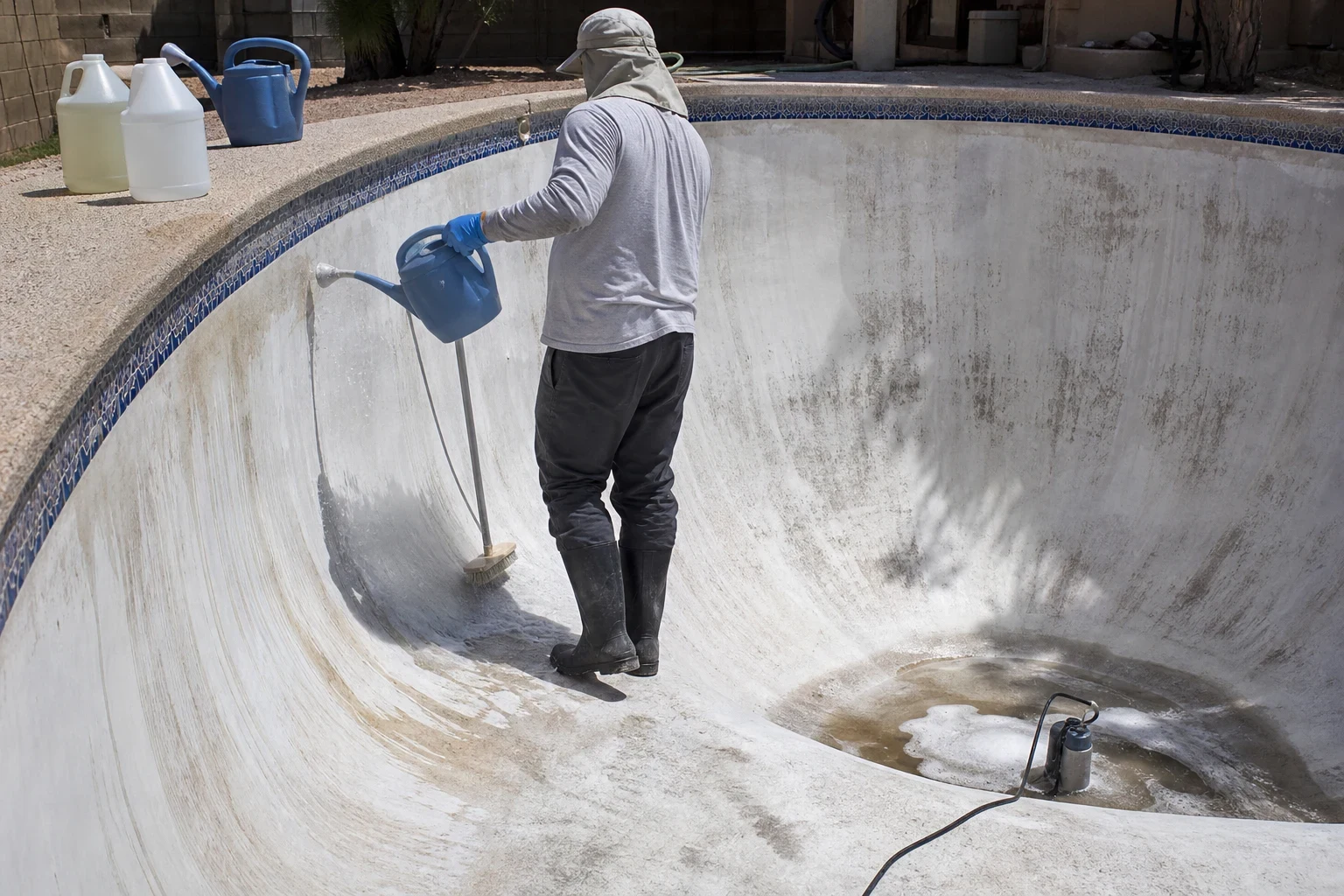
An acid wash is a controlled etch. With the pool drained, we apply a diluted muriatic acid solution to the plaster or pebble surface, brush it in, then neutralize and rinse it away. The top layer of finish comes off, and the stains, scale and embedded algae go with it.
Because every wash takes some plaster, it is not something to repeat casually. Many stains are not in the plaster at all. Iron and copper deposits often lift with a targeted stain treatment while the pool stays full, and some scale responds to chemistry alone. That is why we start by finding out what the mark is. We are CPO certified, and that training in water chemistry is what lets us tell a metal stain from mineral scale before anyone pulls a drain plug.
When a wash is the right call, the result is a brighter, smoother surface and water that is easier to keep balanced afterward.
What our acid wash includes
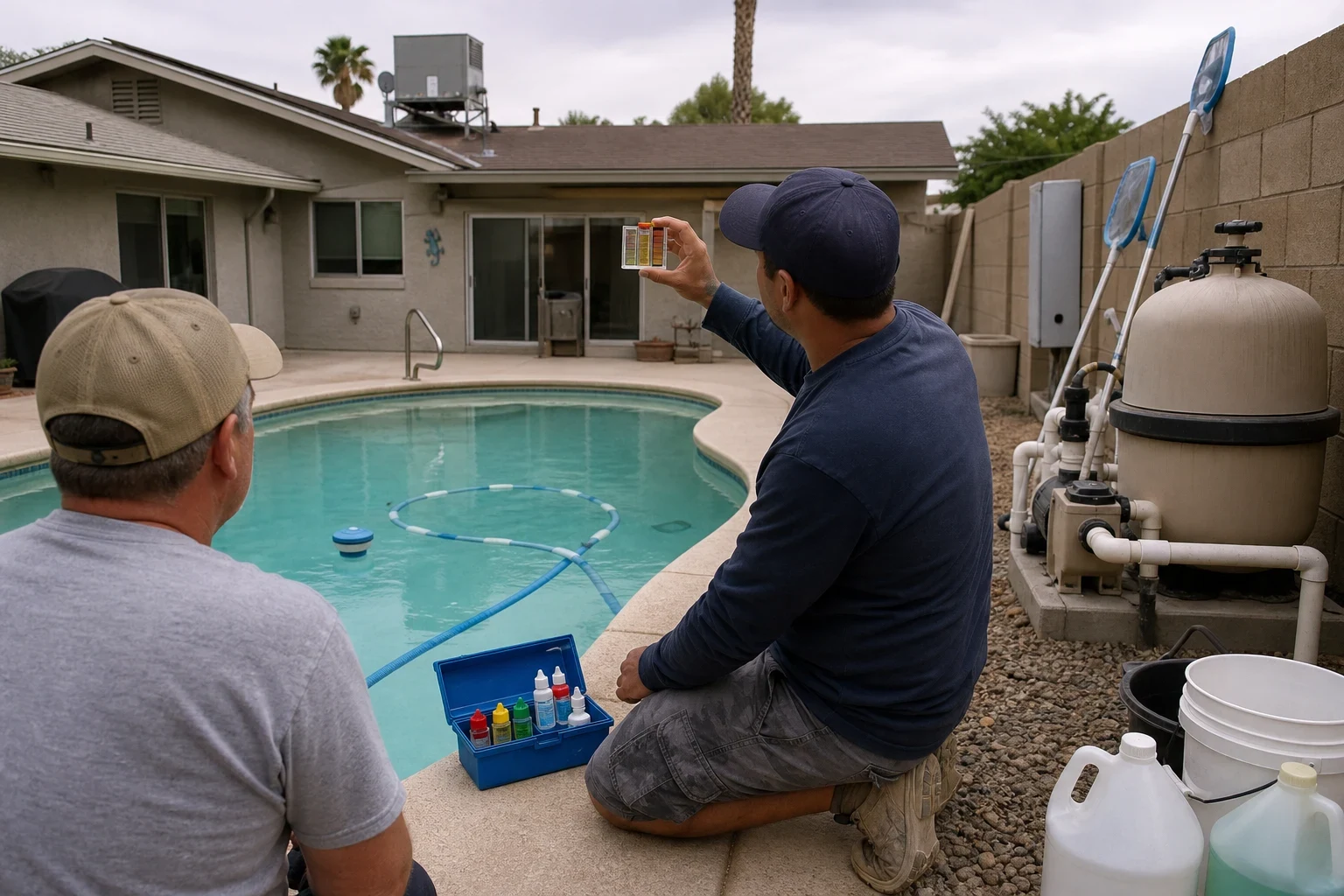
Stain testing before draining
We spot-test discoloration with ascorbic acid and other reagents to see whether it is metal, organic or mineral. If a full wash is not needed, we tell you.
Finish inspection
We check the plaster for thin spots, delamination and rough patches. A finish near the end of its life may not survive another etch, and you should know that before we start.
Draining and protection
We drain the pool following local rules on where pool water can go, and protect nearby decking, plants and equipment from acid splash.
The wash and neutralizing
Acid is applied section by section and brushed so the etch stays even. The runoff is neutralized with soda ash and pumped out before we refill.
Refill and startup chemistry
We refill with fresh water and bring pH, alkalinity and calcium hardness into range so the newly exposed plaster is not attacked or scaled in its first weeks.
Signs an acid wash may help
- Dark stains that won't brush off
- Brown, black or blue-green blotches that stay put after scrubbing and shock. Testing tells us whether they sit in the plaster or on it.
- Gray or white scale across the walls
- Hard water leaves calcium deposits that build into a chalky film. When it covers the whole surface rather than the waterline, an etch is often the cleanest way to remove it.
- Staining left after a green pool
- Long-running algae can leave shadows in the finish even once the water is clear again, often after a Green to Clean Recovery.
- A finish that feels rough
- Sandpaper texture on steps and floors can come from scale and etching. A wash can smooth it if enough plaster remains.
- Preparing your home to sell
- A dull, blotchy pool drags down a backyard. A wash can restore color without the cost of replastering.
How the job runs
- 1
Visit and stain test
We look at the finish, test the stains and check the water. You get a plain answer on whether an acid wash, a stain treatment or a drain and refill is the better fix.
- 2
Drain the pool
We pump the pool down and keep an eye on the shell as it empties. In the hottest months we plan the timing closely so bare plaster is not left baking in direct sun.
- 3
Wash, brush and neutralize
We work top to bottom in sections, controlling dwell time so the etch stays even. Then the acid is neutralized and the residue pumped out.
- 4
Rinse and refill
The surface is rinsed clean and refilling begins. Running a hose all the way to the tile line takes time, and we check the shell along the way.
- 5
Balance and handover
We balance the fresh water and restart the equipment. If you are on our Weekly Pool Cleaning route, the first few visits watch the chemistry closely while the surface settles.
What shapes the price of an acid wash
Most of the price comes from the size of the surface and how much work the stains need. We give you the figure by phone after we understand the pool, and we explain each part so there are no surprises when the job is done.
- Pool size and surface area
- More square footage means more acid, more brushing and a longer drain and refill.
- Type and depth of staining
- Light scale may clear in one pass. Deep metal or algae stains can need a second application or spot treatment.
- Finish type and condition
- Plaster and pebble finishes respond differently, and a worn surface has to be washed gently to protect what remains.
- Water and startup chemistry
- The cost of refilling and the chemicals needed to balance new water are part of the job, especially with hard fill water.
- Added tile work
- Many owners pair a wash with Calcium Removal and Tile Cleaning while the pool is empty, which adds labor but avoids a second drain.
Acid wash questions
- How often can a pool be acid washed?
- Not often. Each wash removes a thin layer of plaster, so most finishes can handle only a few over their lifetime. We would rather solve the cause, whether metals in the water or poor balance, than wash a pool every couple of years.
- Can the stains be removed without draining?
- Sometimes. Metal stains in particular often lift with a targeted treatment while the pool stays full. That is why we test first. If a no-drain option will work, we will say so.
- Do you acid wash vinyl liners or fiberglass shells?
- We don't. The process is meant only for plaster and pebble surfaces. Acid can bleach and weaken a liner and dull the gel coat on fiberglass, so those pools call for a gentler cleaning approach.
- When can we swim again after the wash?
- Plan on roughly two days between pulling the drain and getting back in the water. A larger pool or slow water pressure at your home can stretch that a little. We share the expected schedule along with your quote.
- Is it safe to drain a pool in summer?
- It can be done, but bare plaster in extreme heat needs care, and some shells are affected by groundwater. We plan the timing, keep the shell empty for as short a time as possible, and work as an ROC licensed contractor with that risk in mind.
Find out what the stain really is
Describe the marks on your plaster and roughly when the pool was last resurfaced. We will talk through whether an acid wash is worth doing and what the job would involve for your home.