ServicesFilter Cleaning
Pool Filter Cleaning in Phoenix
When a filter loads up with dust and oils, flow drops, the pump strains and the water loses its clarity. We open the tank, clean the media by hand and compare pressure readings before and after, so you learn whether the filter was the real issue or another part deserves a look.
What a proper filter cleaning does for your pool
Your filter catches the fine material the skimmer and pump basket let through: dust, pollen, sunscreen oils, dead algae and the mineral scale that builds in hard water. As that material packs in, flow drops, the pressure gauge climbs and chlorine has to work against debris the water can no longer shed. A good cleaning restores flow and lets your chemistry hold steady again.
We treat every cleaning as a chance to check the cause, not just the symptom. High pressure is usually a loaded filter, but it can also come from a partly closed return valve or a filter that is too small for the pump. We note the reading when we arrive, compare it after the clean and tell you plainly if the numbers point somewhere else.
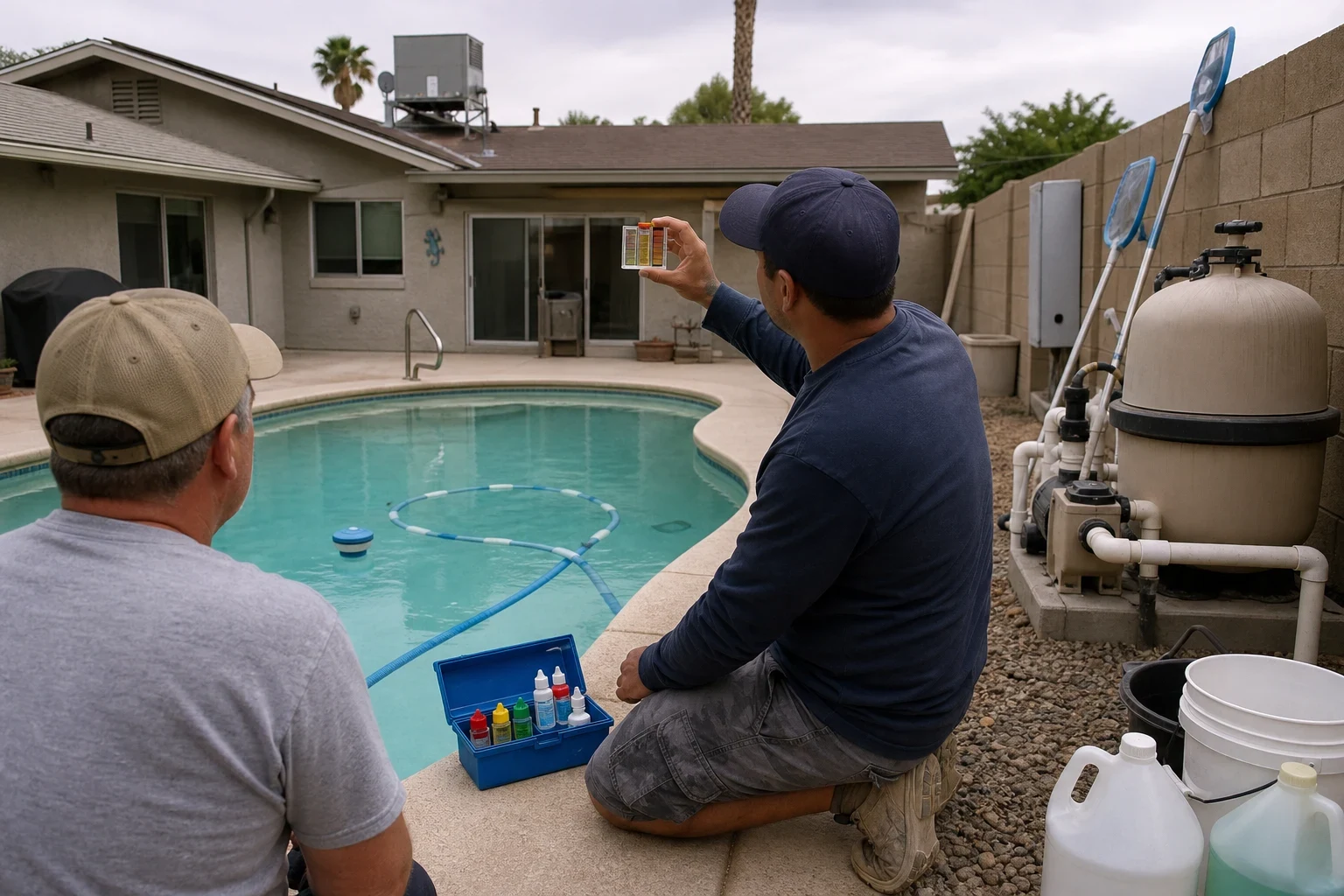
Our technicians are CPO certified, which means the water chemistry side of the visit gets the same attention as the hardware.
What is included in the visit
- Cartridge filters
- We remove each cartridge and rinse every pleat from the top down. Cartridges with oil buildup get a degreasing soak first, then an acid soak if calcium has crusted the fabric. Degreasing before acid matters, because acid locks oils into the media.
- DE filters
- We open the tank, pull the grid assembly and clean each grid by hand. We look for tears and worn seams, then recharge the filter with the right amount of fresh DE for its size.
- Sand filters
- We backwash and rinse, then check how the sand behaves. Sand that has clumped or channeled no longer filters well, and we will tell you if it is time to replace it rather than keep backwashing.
- Seals, lids and gauge
- The tank o-ring is cleaned, inspected and lubricated before the lid goes back on. We check the air relief valve and confirm the pressure gauge reads accurately, since a stuck gauge hides real problems.
- A clear before-and-after reading
- You get the starting pressure, the clean pressure and a short note on what we found in the media. That clean reading becomes your baseline for knowing when the next cleaning is due.
Signs your filter needs cleaning
Pressure has climbed
Most filters are due when the gauge sits about 8 to 10 psi above its clean reading. If you do not know your clean reading, that is the first thing we record.
Weak return jets
Flow at the returns feels soft even with the pump basket empty. That usually means the filter is loaded, though a clogged impeller can feel the same, so we check both.
Cloudy water despite good chemistry
If the chlorine and pH test fine but the water stays hazy, the filter is often passing fine particles it should be holding.
After a dust storm
A monsoon storm can drop more fine dirt into a pool in one evening than a month of normal use. A filter that was fine last week may be packed today.
Gritty or white powder on the floor
Fine sand or DE returning to the pool points to a torn grid, a cracked lateral or a failed seal inside the tank.
What affects the price of a filter cleaning
We price a filter cleaning from the actual filter on your equipment pad, not from a guess over the phone. Its type, size and condition shape the number, and you hear that number before any work starts.
Cartridge, DE or sand
Each design asks for its own steps and supplies. A DE tank, for example, needs fresh powder after the grids are cleaned, while a sand filter is mostly about backwashing and judging the bed.
Size and number of elements
A large four-cartridge filter takes longer than a single-cartridge unit, and multi-grid DE tanks take more handwork.
How much scale and oil
Hard water leaves calcium in the fabric. Cartridges that need both degreasing and an acid soak take more time and product.
Worn parts found inside
A torn grid, a split cartridge or a flattened o-ring is replaced only with your approval, and we show you the part first.
How the cleaning goes on the day
- 1
Read and record
We check the pressure with the pump running, look at the return flow and empty the skimmer and pump baskets so they do not skew the reading.
- 2
Shut down and open the tank
We turn off the pump, close the valves, release pressure through the air relief valve and remove the lid or clamp band.
- 3
Clean the media
Cartridges, grids or sand are cleaned for their type. Heavily scaled cartridges may need a longer soak, and we will tell you if that means a second short visit.
- 4
Inspect and reassemble
We look for torn fabric, cracked end caps and worn o-rings, then reassemble, bleed the air and restart the system.
- 5
Compare and explain
We read the clean pressure, check the water and walk you through anything that needs a closer look. If a part has failed, we can quote that work under Pool Repair.
Filter cleaning questions
How often should my filter be cleaned?
For most cartridge and DE filters here, every three to six months is a reasonable range. Heavy swim use, nearby trees and dust storms shorten it. The pressure gauge is the best guide, which is why we give you a clean baseline to watch.
Can I just hose off my cartridge myself?
A rinse helps between cleanings, but it does not remove oils or calcium worked into the fabric. Over time those shrink the usable surface, and the cartridge clogs faster after each rinse. A full degrease and soak resets it.
Is my filter the reason my water is cloudy?
Sometimes. Cloudy water can also come from low chlorine, high pH or short pump run times in summer. We test the water during the visit so we can tell you which one is actually causing it.
Do you replace cartridges or sand too?
Yes, when the media has reached the end of its life. Frayed pleats and soft end caps let debris slip through, and sand that has channeled will not recover with more backwashing. If a proper cleaning can restore it, that is what we suggest instead of new media.
Do your weekly visits cover the filter?
During our weekly pool cleaning visits we read the filter pressure every time and let you know when a full cleaning is coming due. The chemicals we add are already covered by the monthly price. You are never locked into an agreement, and you can cancel anytime.
Find out what your filter needs
Tell us your filter type and what you are seeing at the returns. Our ROC licensed team will give you a straight answer and a clear price before any work begins.