ServicesCalcium Removal and Tile Cleaning
Calcium Removal and Tile Cleaning in Phoenix
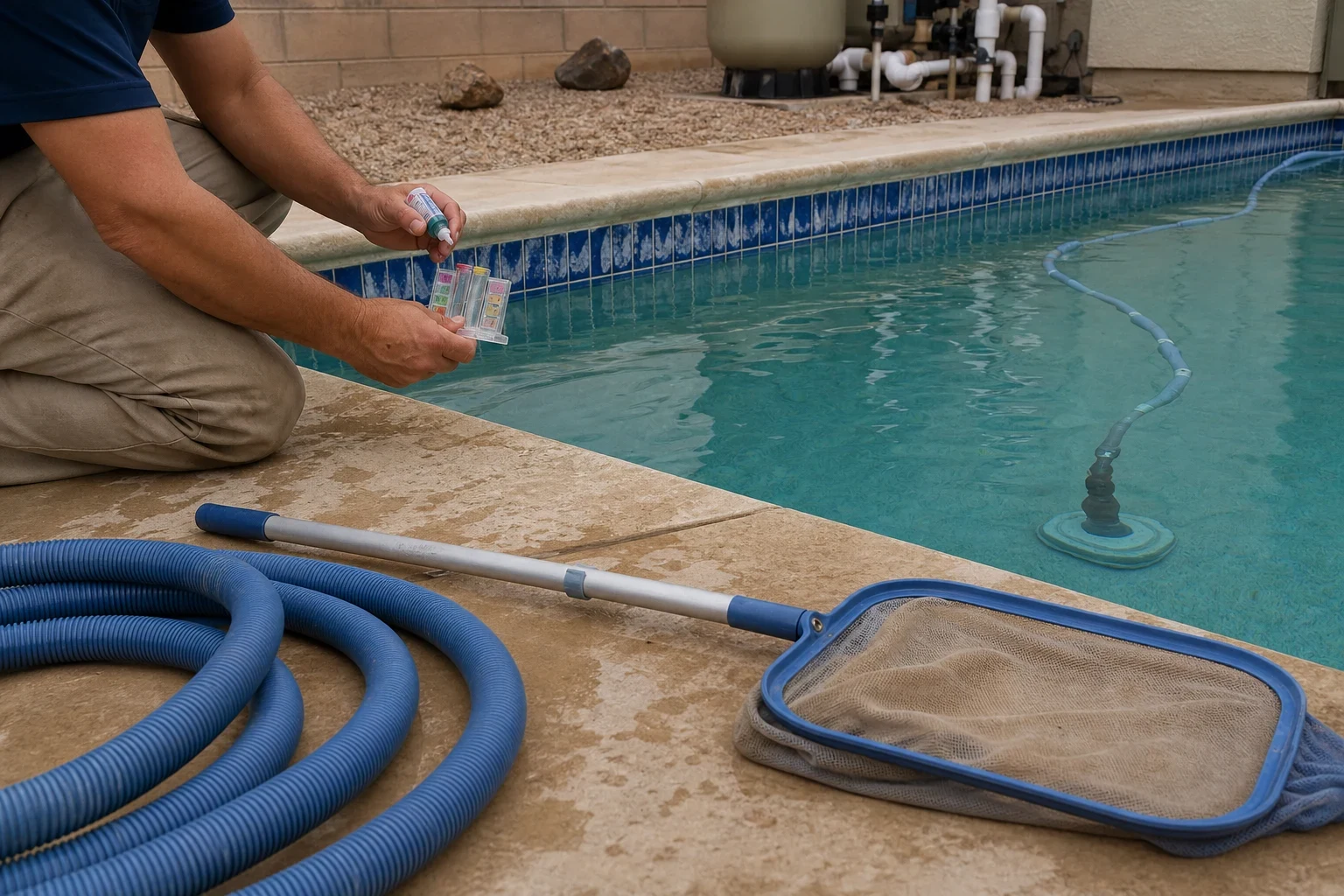
That white band at your waterline is not always the same deposit, and the wrong method can scratch glass tile or barely touch hard scale. We test what is on your tile first, then remove it carefully and leave the water balanced to slow its return.
Clean tile starts with knowing what is on it
Most waterline scale here is calcium carbonate. It is white, chalky and usually comes off with the right blasting media or a mild acid treatment. Calcium silicate is different. It forms in gray-white, glassy layers, ignores most acids and needs patient mechanical removal. Many tile lines carry both, along with a gray film from sunscreen, oils and dust.
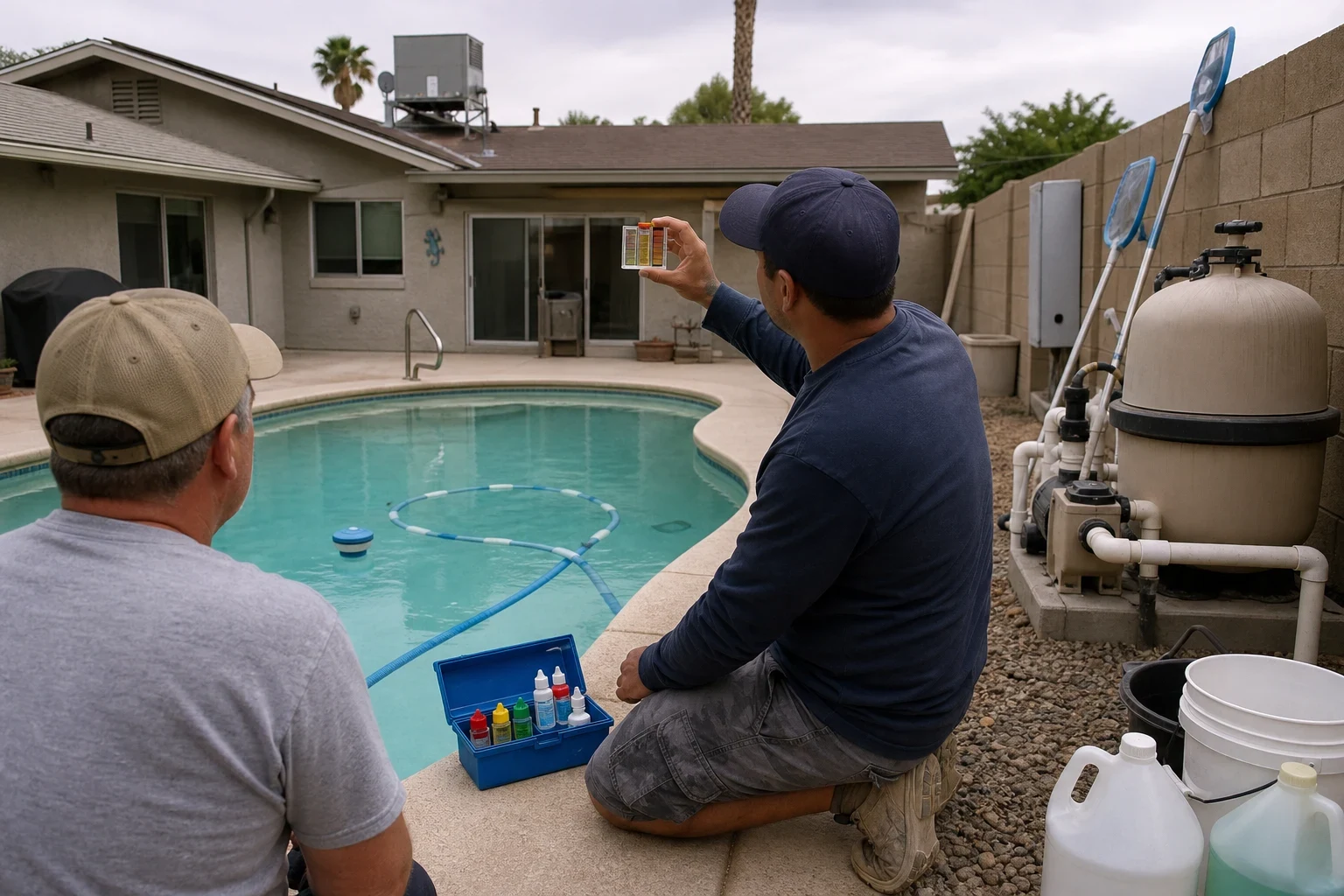
We start with a simple spot test so we know which deposit we are dealing with before anything touches your tile. That choice decides the media, the pressure and how long the job takes. It also tells us whether your water chemistry is feeding the problem. With hard water and heavy summer evaporation, scale returns quickly when calcium hardness and pH run high, so the water gets attention along with the tile.
What the service includes
- Scale testing at the waterline
- We test a few spots along the tile to tell carbonate from silicate and check how deep the buildup goes. You hear what we found before work begins.
- Media chosen for your tile
- Ceramic and porcelain tile handle firmer media. Glass tile, stone and decorative trim get a gentler media and lower pressure so the surface keeps its finish and color.
- Water lowered just below the tile
- For most pools we lower the level a few inches so the full tile band is exposed, then refill once the work is done. A full drain is rarely needed for tile work alone.
- Protection for your yard
- Decking, plants, pool equipment and nearby windows are covered or shielded before blasting starts. Spent media is collected so it does not end up in your filter or garden beds.
- Grout and trim check
- Clean tile makes loose grout and cracked pieces easy to see. We point out anything that needs attention and let you decide whether to schedule a pool repair.
- Water balance afterward
- We test calcium hardness, pH and alkalinity after the refill and adjust them so the water is less inclined to drop scale back onto clean tile.
Signs your tile needs attention
A white crust that will not brush off
Weekly brushing removes film, not scale. If the band feels rough or gritty, minerals have hardened onto the tile surface.
Gray, glassy patches
Hard, shiny deposits that look almost part of the tile are often calcium silicate. They tend to thicken every season if left alone.
Tile color looks faded
Blue and glass tile can look dull and chalky long before the buildup feels thick. Removing the haze usually restores the original color.
Scale on the spa spillway or water features
Splash and evaporation concentrate minerals where water falls and dries, so spillways and sheer descents often show it first.
Rough spots on the plaster or pebble just below
Scale that spreads past the tile line can point to water that is out of balance. That is worth checking before the finish itself is affected.
What affects the price
Every quote is based on your pool, so we look before we put a number on it. Your quote comes free over the phone or after a quick look at the tile, with the work explained line by line. These are the things that move it.
Length of the tile line
A long freeform pool with a raised spa and wall has far more tile to cover than a compact rectangle.
Type and depth of scale
Thin carbonate comes off quickly. Thick or layered silicate takes more time and more careful passes.
Tile material
Glass and stone tile call for gentler media and slower work, which adds time compared with standard ceramic.
Water features and access
Spillways, rock features and tight areas near walls or screens take extra setup and protection.
Water and refill needs
How far the level must drop and how much water goes back in, along with the chemicals to rebalance it, are part of the total.
How the work goes on the day
- 1
Look and test
We walk the tile line with you, run the spot test and explain which deposit is there and which method suits your tile. If acid washing or a full drain would serve you better, we say so plainly.
- 2
Lower the water and set up
The pool is lowered just below the tile, the pump is shut off as needed, and your deck, plants and equipment pad are protected.
- 3
Remove the scale
We work the tile in sections, checking the surface as we go. Stubborn silicate gets slower, closer work rather than more force.
- 4
Clean up and refill
Media is swept and vacuumed out, the tile is rinsed and the pool is refilled. We then balance the water and walk you through what we see.
Questions about calcium removal
Could the blasting damage glass or stone tile?
The risk comes from using one setting on every surface, so we don't. Glass tile and stone get a softer media at lower pressure, and we stop to look at the finish as each section is done. Any etching or chips that were already hidden under the scale will still be visible once it comes off.
Does the pool need to be drained for this?
In most cases, no. Dropping the level a few inches below the tile band gives us full access. If your plaster is also stained or rough, we may recommend combining the tile work with a pool drain and refill or an acid wash.
Is a pumice stone a good do-it-yourself option?
On light carbonate over standard ceramic tile, pumice can help. On glass tile it leaves scratches, and against silicate it barely makes a dent. If you want to try it, start on a small spot out of sight and stop the moment the tile looks cloudy.
How soon will the white line come back?
With hard water, some buildup returns over time, and your water chemistry largely decides how fast. Holding calcium hardness and pH in range and brushing the waterline regularly slows it a great deal. Customers on our weekly pool cleaning have that balance checked at each visit.
Who handles the work and the water chemistry?
We are ROC licensed and CPO certified, which means the chemical side of the job, including rebalancing after the refill, is done with proper training. We serve Phoenix and nearby towns including Scottsdale, Glendale and Tempe.
Find out what is on your tile
Describe the buildup you have noticed along the tile line and we will go over what is likely causing it and which method fits your tile. Your quote is free, and you are under no obligation to book.